
Most platform comparisons are written by agencies that only build on one platform — so Shopify shops conclude Shopify, and WordPress shops conclude WooCommerce, and none of it helps you decide. We build on WooCommerce, so you know our bias up front. What follows isn’t “WooCommerce always wins” — it’s the specific situations where it wins clearly for Australian businesses, and the ones where Shopify is honestly the better call.
1. When content is part of how you’ll grow
If your growth plan includes ranking for searches, publishing buying guides, or building authority in your niche, WooCommerce’s WordPress foundation is a structural advantage. Content and commerce live on one engine, internal links flow from articles to products without duct tape, and the SEO toolset is the deepest on the web. On hosted platforms, the blog is famously an afterthought — workable, but you’ll fight it. Stores that win organic search win it with content, and this is the platform difference that compounds hardest over time.
2. When transaction fees start to hurt
Shopify’s costs scale with your success: plan tiers, app subscriptions, and payment processing that penalises you for using an external gateway. At $10,000/month in sales the difference is annoying; at $100,000/month it’s a salary. WooCommerce charges no platform percentage — you pay your payment gateway and your hosting, and both are negotiable, swappable, and flat-ish. We’ve mapped the crossover maths in the real-cost section of our comparison guide; if you’re past early volume, run your own numbers through it.
A useful self-test: list what you’re actually paying — plan, apps, and the gap between your gateway’s rate and what you’d pay Stripe directly — then multiply by twelve. Store owners who do this exercise rarely need the rest of this article.
3. When your business has rules a template can’t hold
Wholesale price tiers by customer. Quote-then-invoice flows. Hire periods with bonds. Trade portals with account managers. Australian B2B and specialty retail is full of businesses whose selling logic doesn’t fit a standard cart — and on a hosted platform, every workaround is another app subscription approximating what you actually need. WooCommerce is code you control: if the rule exists in your business, a developer can build it into your store exactly.
The tell is the workaround count. When your team maintains a spreadsheet beside the store, or staff “know the trick” for handling trade orders, the platform stopped fitting a while ago — you’re just paying monthly to compensate for it manually.
4. When your Australian stack needs to work as one system
The pattern we see in established Australian retailers: Xero or MYOB for the books, Square or Lightspeed at the counter, Shippit or AusPost out the door, Afterpay at checkout. WooCommerce integrates with all of it at the API level — owned integrations, not rented apps — and when something needs to sync in a way no connector anticipates, it can be built. Multi-system retail is where platform limitations turn into spreadsheet jobs for your staff.
5. When data sovereignty matters
On WooCommerce, your customer data lives in your database on your server — ours sit in Australian data centres — and Privacy Act compliance is something you can actually verify rather than take on faith. For businesses handling sensitive customer relationships, or anyone who’s read their platform’s data-processing addendum and frowned, this one decides the question by itself.
6. When you’re thinking past the store you have today
Memberships, subscriptions, multi-brand catalogues, a B2B portal beside the retail store, AI-driven product content — a platform store does what its plan allows. An open-source store does what you decide. That optionality is hard to price until the day you need it, which is usually the day a platform store starts planning a migration.
7. When being found by AI matters as much as being found by Google
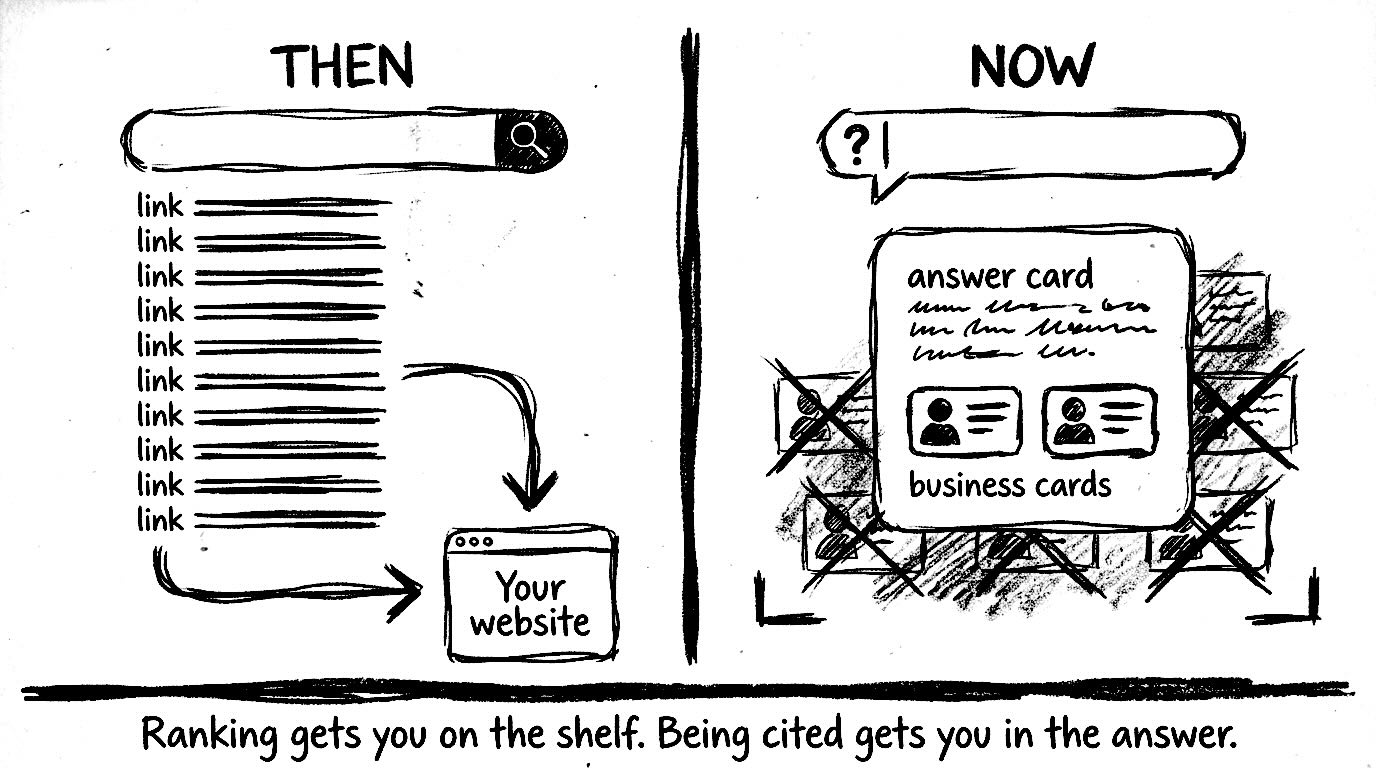
Search is splitting: people increasingly get answers from AI Overviews and chat assistants, which cite sources rather than list links. Earning those citations takes deep content, precise schema markup, and full control of your site structure — all native strengths of the WordPress/WooCommerce stack, and all constrained on platforms where templates and apps own your markup. If the next five years of being found matter to your store, this is quietly becoming the most important scenario on this list. (We’ve gone deeper on AI for WooCommerce stores.)
The numbers behind the argument
This isn’t theoretical for us. Across Australian WooCommerce stores we build and run: a Melbourne butcher up 63.9% in new users year-on-year; a costume retailer ranking Page 1 for 88% of tracked local searches with an average position of 4.1; a motorsport apparel brand up 111% in sessions with engaged visits up 190%; a seafood business with 51 of 76 keywords on Page 1, outranking the Queen Victoria Market. All verified in Google Analytics and Search Console — the full case studies are here. The platform doesn’t create those results, but it’s what makes the work that creates them possible.
When Shopify honestly wins
Speed to launch: nothing beats it for selling this weekend. Micro-catalogues with no custom logic: the simplicity is genuinely worth the fee. Zero maintenance appetite: Shopify’s guardrails mean nobody has to think about updates or security. Social-first selling where the website is secondary: fine. If that’s your business and it stays your business, Shopify isn’t a mistake — it’s a reasonable rent-vs-buy decision at small scale.
The catch is that businesses grow out of those conditions, and platform economics get worse precisely as you succeed. That’s why the migration path matters: moving is a solved problem — we’ve written a step-by-step guide to migrating from Shopify without losing SEO, and our migration service runs these cutovers with rankings intact.
What a proper migration preserves: your products, customers, and order history; your URL equity via mapped redirects; your rankings, with the content rebuilt rather than flattened; and your integrations, reconnected at the API level instead of re-rented as apps. What it costs is a project, not a catastrophe — typically weeks, with the old store trading until the hour of cutover.
The honest summary
Choose Shopify to start fast and small. Choose WooCommerce when the store is a business asset: when content drives growth, fees bite, rules are yours, the Aussie stack needs to sync, or the data needs to be where you can see it. And if you chose Shopify years ago and the fees now sting — that’s not a mistake to regret, it’s a graduation. Talk to us when you’re ready to look at the numbers; we’ll tell you honestly if moving isn’t worth it yet.

Leave a Reply