
Website design and build
Website design and development that starts with a review
Your website has to help customers understand your business and then enquire or buy. Before we propose anything, we review the site as it is, on a phone, through the journeys a customer takes and against what search engines and AI assistants can read. Then we design and develop where the review says the business needs it, and no further.
Businesses we have worked with
The review comes first
Most websites we are asked to look at look fine. They fail at the next step, so the review starts there. We open the important pages on a phone and time them. We follow the journeys a customer takes, from finding the right page to understanding the offer to sending the enquiry or completing the purchase, and we test the forms and the checkout instead of assuming they work.
Then we look at what the site tells the systems that read it. Business facts, headings and structured data should say the same thing on every page, because search engines and AI assistants describe you from what they find there. We check whether their crawlers can reach the pages at all, which the hosting, the firewall and the robots rules decide. We look at the hosting, who holds the access and who owns what. And we read the code and the add-ons for anything that will break, slow the site or stop it being maintained.
You get a report with the findings in the order of what costs the business most, a recommendation against each one and a name beside it, whether that is us, your own developer or your hosting provider. It also gives a straight answer to the question most owners actually have. Is a focused improvement enough, or is a rebuild warranted.
Example review findings
In order of what costs the business most
Enquiry form fails on a phone
Fix first
Us
AI crawlers blocked by the firewall
Fix
Your hosting provider
Business facts differ between pages
Fix
Us
Unmaintained add-on in the checkout
Plan
Your developer
The answer: a focused improvement is enough
Design
Design starts with the next step a customer needs to take. A service buyer wants to know what is included before they send an enquiry. A shopper needs the product details and a way to pay. Each journey decides which pages the site needs, what goes on them and what the layout has to make obvious, so the design serves that before it serves anything else.
We design for the phone and the desktop in your brand style, and you review the important layouts before development begins. Changing a layout on paper is cheap. Changing it after the build is not.
Layouts reviewed before the build
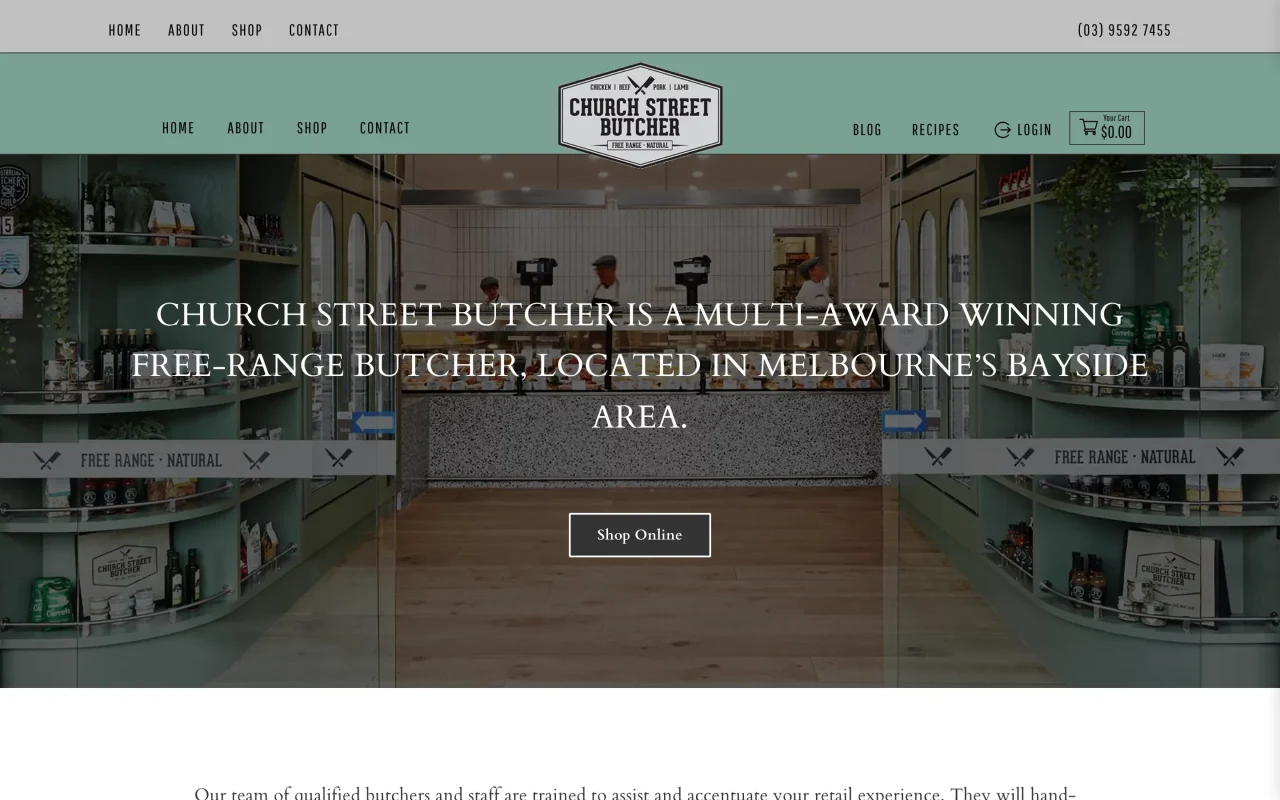
A recent project

Development
A website needs functions as well as pages. Enquiry forms, bookings, product rules, checkout behaviour and the links to accounting, fulfilment or a CRM all decide whether a customer’s action turns into something your staff can act on. We write each one down as a specification that says who uses it, what should happen and how you will know it worked, including what happens when information is missing or a request fails.
We check maintained add-ons before anything custom is built. Where nothing fits, we build the function inside the project with its ownership and maintenance written down.
Example specification
Enquiry form
Who uses it
A customer asking for a quote
What should happen
The enquiry reaches the right person, and the customer sees what happens next
How you will know it worked
A test enquiry arrives with every field intact
If something fails
The customer sees a clear message and nothing they typed is lost
Build where required
A rebuild happens only when the review calls for it. Where the existing structure still serves the business, a defined improvement is the better starting point, and we say so. When a rebuild is warranted, the technical construction is what gives the design something to do.
Loading and reliability
The theme, the images, the scripts and the hosting all affect how fast a page opens, and a slow page on a phone loses the customer before they read a word. We test representative pages and the functions that matter against the requirements set at the start.
Information for people and search
Page structure, headings and navigation help a visitor find the answer. Descriptive titles and structured data help search engines and AI assistants understand the same page, in a form those systems can read.
Journeys that work
Someone should be able to find the right page, understand the offer and complete the next action. Mobile layouts, keyboard use, form messages and every purchase step get checked, because that is where sites quietly fail.
Routine editing
Text, images and links need to stay current after launch. You edit them in the site’s editor, using the reusable sections we set up, and we show you which parts you can change and how.
The work included in a build
- Business requirements, page planning and the customer journeys that matter.
- Mobile and desktop design in your brand style.
- Maintainable code and page content you can edit.
- The forms and customer functions the site needs.
- Page titles, descriptions and structured data.
- Performance, mobile, keyboard and function checks.
- Analytics and enquiry measurement.
- Mapping existing URLs, redirects and launch checks.
- Editing guidance, documentation and handover.
From the first review to the handover
You see the important layouts before development begins and the working functions before anything is released, so there are no surprises at the end. At handover you know how to edit the site, where every account lives and who maintains each part from then on.
We deliver the whole build in-house, so the person you brief is the person who builds it. The proposal sets out the pages, revisions, responsibilities and dates, including any ongoing care you want after launch, and we ask you for accurate business information, access and approvals along the way.
Our work
Recent website design work includes Church Street Butcher, Discovery Consulting and BPM Projects.
Questions before a website build
Do we have to rebuild?
Not until the review says so. It tells us whether a defined improvement will do the job or whether the structure, the code or the hosting has reached the point where a rebuild costs less than another round of repairs.
Can we update the site ourselves?
Yes. Routine text and image changes happen in the site’s editor, and we walk you through them at handover. New functions or a substantial design change need their own work plan.
Which platform do you build on?
We build on WordPress and WooCommerce, and have for more than ten years. The review covers a site on any platform, and the recommendation says whether moving is worth it.
Can existing content and store data be moved?
Usually, once we have looked at where it is coming from and where it is going. The transfer scope names the data, the quantities, the checks and who is responsible for each part.
What happens after launch?
Hosting, care, content writing and copywriting, SEO and AI Search are available on their own or together. The build proposal says what follows handover and who owns it.
Will AI assistants recommend the website?
Accessible pages and accurate information make it more likely that an assistant finds and describes you correctly. Assistants choose their own sources, so nobody can guarantee a recommendation or a citation.
Read more about website design
-
WooCommerce Blocks Part 1 — Getting Started With WooCommerce Blocks
When WordPress 5.0 came out, they redeveloped the post editor or default page to make it more user-friendly and responsive. Unfortunately, WooCommerce…
-

What Small Businesses Need to Know About Google’s Core Web Vitals
There was a time when starting a small business was something of a pipedream that very few pursued, simply because competing with…
-

Criteria for Designing an SEO-Friendly Website
Search engine optimisation involves a multifaceted approach to digital marketing. SEO stretches beyond basics such as keyword optimisation to complex technical practices.…
Tell us what needs to work better
Describe your current website, what frustrates you about it and what it has to do for the business. We will get back to you.